
MIRATECH blog
As the line between molecules and electrons disappears, emissions strategy can no longer be an afterthought. Integrating aftertreatment early is what turns critical energy infrastructure from permitted designs into operating assets.
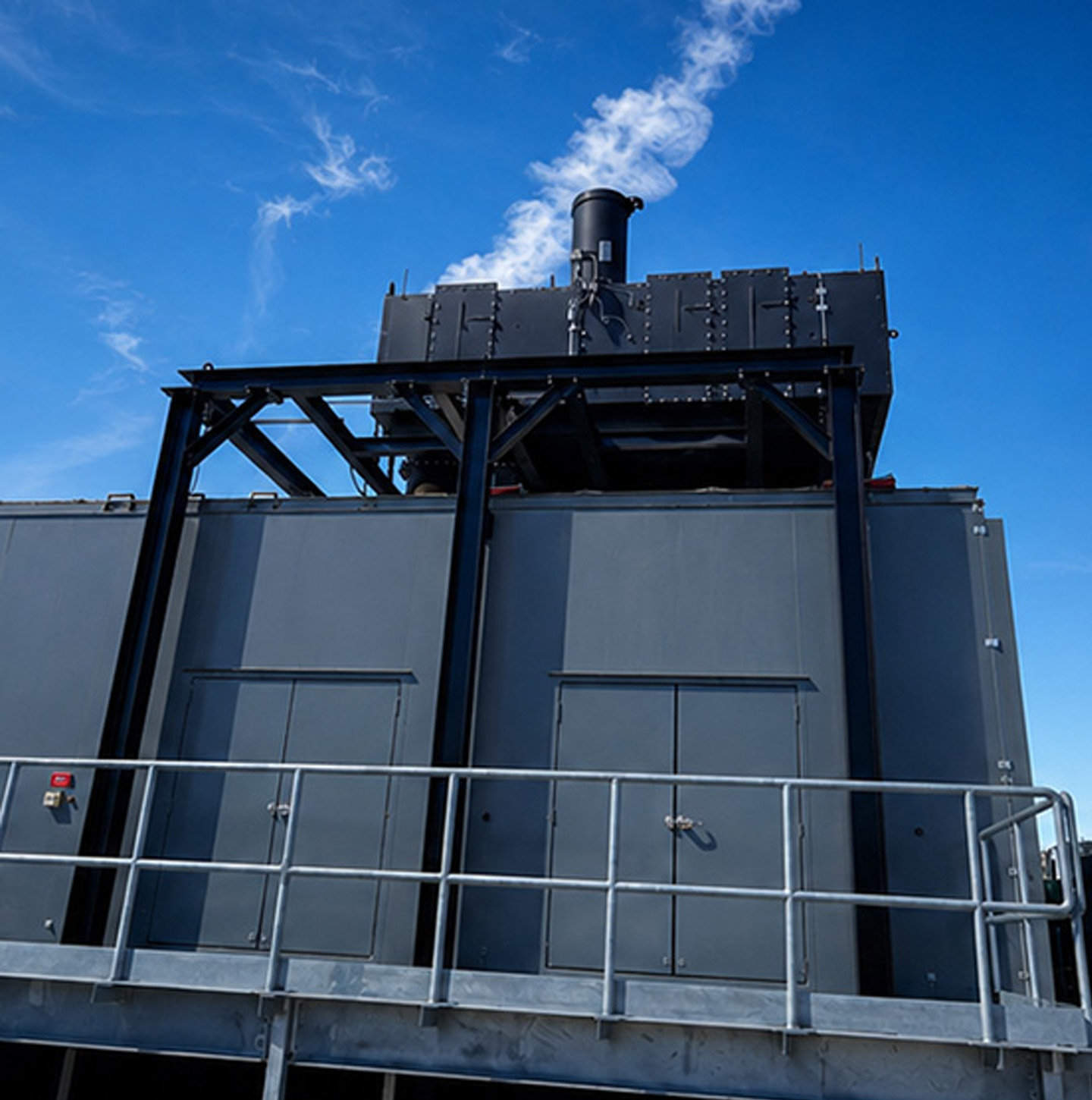
The line between natural gas infrastructure and power infrastructure is disappearing.
At the end of 2025, 255 GW of natural gas generation capacity was active in U.S. generator interconnection queues, up from 136 GW one year earlier—an 87% increase. At the same time, proposed interstate natural gas pipeline capacity reached approximately 18.2 Bcf/day, with FERC identifying growth in gas-fired power generation among the primary drivers.
Natural gas supplied approximately 43% of U.S. utility-scale electricity generation in 2024, up from 28% a decade earlier. The U.S. Department of Energy has also identified the growing operational interdependence between gas and electric infrastructure.
This is more than just increased demand for natural gas. It is a step change.
Historically, gas compression and power generation occupied separate spaces.
Long interconnection waits, constrained grids and equipment shortages are driving data centers, industrial facilities, manufacturing campuses and other large-load projects towards integrated energy solutions behind the meter:
wellhead → compression → transportation → onsite power plant→ electrical load
The infrastructure required to move the molecule and the infrastructure required to produce the electron are moving onto the same critical path.
Midstream and integrated energy companies are scaling production, pipelines and moving into the power generation business while compression packagers explore building generator equipment.
These are not isolated moves. They are signals of where the infrastructure market is going. There is also a fundamental mechanical reason these markets fit together.
That shaft can drive a compressor
Or it can drive a generator
The operating environments are different, but there is substantial overlap in:
The hardware convergence is important.
The strategic convergence is even more important.
Customers are no longer buying horsepower or megawatts in isolation. They are investing in energy infrastructure that must be approved, commissioned, and performing on schedule.
Aftertreatment has traditionally been considered a downstream equipment decision:
However, that sequence is becoming increasingly risky.
When gas infrastructure and power generation are part of the same schedule, emissions performance becomes connected directly to project execution:
That means aftertreatment decisions can influence:
regulatory approval, commissioning readiness, operating flexibility, maintenance requirements, asset availability and ultimately time-to-operation.
The regulatory environment reinforces this point.
Stationary turbines and reciprocating engines are subject to local, state and federal requirements addressing criteria and hazardous air pollutants including NOx, CO, VOCs, formaldehyde and other hazardous air pollutants.
The exact requirements vary by technology, location, configuration and potential to emit.
But the implication is straightforward:
Emissions strategy cannot begin after the equipment strategy is complete.
This distinction matters.
No project can afford to treat the emissions system as an afterthought. The goal is to ensure the emissions system does not become the reason the customer cannot achieve the intended outcome.
Those are very different engineering conversations:
As power generation and gas compression continue to converge, emissions strategy should be evaluated against three outcomes.
Can the proposed system satisfy the project’s applicable regulatory and permitting requirements?
This must be understood before equipment decisions become difficult or expensive to change.
Can the system be commissioned and brought online without emissions equipment, controls, tuning or compliance requirements becoming schedule constraints?
Mechanical completion is not the same as operational readiness.
Can the asset maintain compliance while delivering the required output, availability and operating flexibility over time?
Passing an initial emissions test is necessary.
It is not the definition of long-term success.
The convergence of power generation and gas compression is being driven by forces much larger than emissions control: load growth, constrained transmission infrastructure, natural gas availability, data-center expansion and demand for reliable power.
But those forces have an important consequence.
As more large combustion assets are required to move gas and generate electricity, more projects will encounter the same intersection of:
performance + permitting + emissions + schedule.
That intersection cannot be managed effectively by downplaying the importance of aftertreatment as a vital part of the system. It must be part of the infrastructure strategy. Because the projects that win will not simply be the ones that secure engines, turbines, compressors or fuel first. They will be the ones that successfully connect all those decisions and turn permitted infrastructure into operating infrastructure.
Ensuring an emissions strategy helps customers get critical energy infrastructure approved, commissioned and running is a crucial target to hit.
That is the standard the industry should be designing toward.
We enable that standard while enabling energy infrastructure.
MIRATECH. Engineered to Perform®
