Gathering + Production
Emissions and acoustic systems for field and gathering compression operating across variable production rates, remote locations and changing inlet conditions.

KEEP GAS MOVING | GAS COMPRESSION
MIRATECH integrates emissions, acoustic and exhaust systems around one outcome: compression uptime - from wellhead to transmission pipeline.
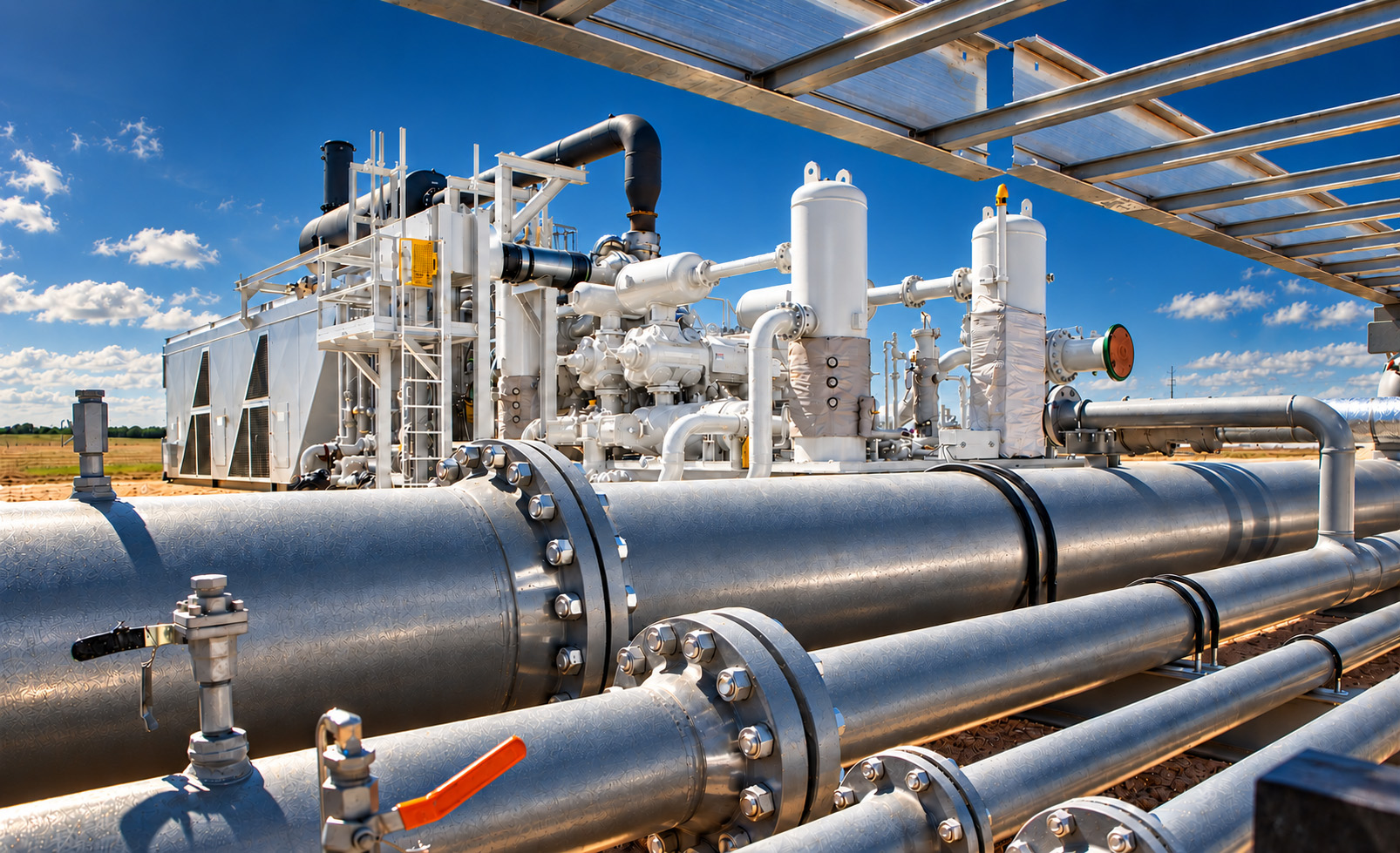
Natural gas creates value only when it keeps moving. But station availability is not determined by the engine alone.
Changing loads, field gas, exhaust temperatures, emissions limits, acoustic requirements and maintenance needs all affect how reliably a compressor station can operate. When those requirements are engineered separately, the interfaces become the operator’s problem. That’s why MIRATECH provides fully integrated energy infrastructure services for industrial engine-based power generation and midstream infrastructure operations.
Gas compression sites are being asked to move more gas within the same footprint. That means greater installed horsepower, more equipment density and increased pressure on site-wide emissions limits.
The challenges are compounding:
Meeting these requirements takes more than selecting a catalyst. MIRATECH engineers emissions and exhaust systems around real engine performance, operating conditions and permitting targets – helping compression assets achieve natural gas compliance and keep operating reliably.
Natural gas is forecast to provide approximately 40% of U.S. electricity generation in both 2026 and 2027 – linking reliable gas movement directly to power availability. Approximately 44.9 Bcf/d of new U.S. pipeline capacity is planned for 2026 and 2027, with 70% already under construction.
Sources: U.S. Energy Information Administration, U.S. natural gas consumption set a monthly and yearly record in 2025, March 18, 2026; and Short-Term Energy Outlook, August 2026.
Gas Compression and Power Generation Are Becoming One Operating Conversation.
Gas compression and power generation have historically been planned as separate systems. Increasingly, the performance of one depends on the other.
Growing gas-fired and onsite generation creates demand at specific locations, often with sharper changes in operating profile. Meeting that demand requires adequate gas supply, pipeline capacity and compression.
The result is a more connected operating environment:
More Value From Standardization
Common system architectures, parts strategies and maintenance practices can reduce complexity across gas and power assets—particularly for multi-site and multi-region operators.
MIRATECH works across both markets, applying a common system-level approach to the industrial engines, exhaust conditions and compliance requirements that connect them.
Key Takeaway: Reliable power increasingly starts with reliable gas supply.
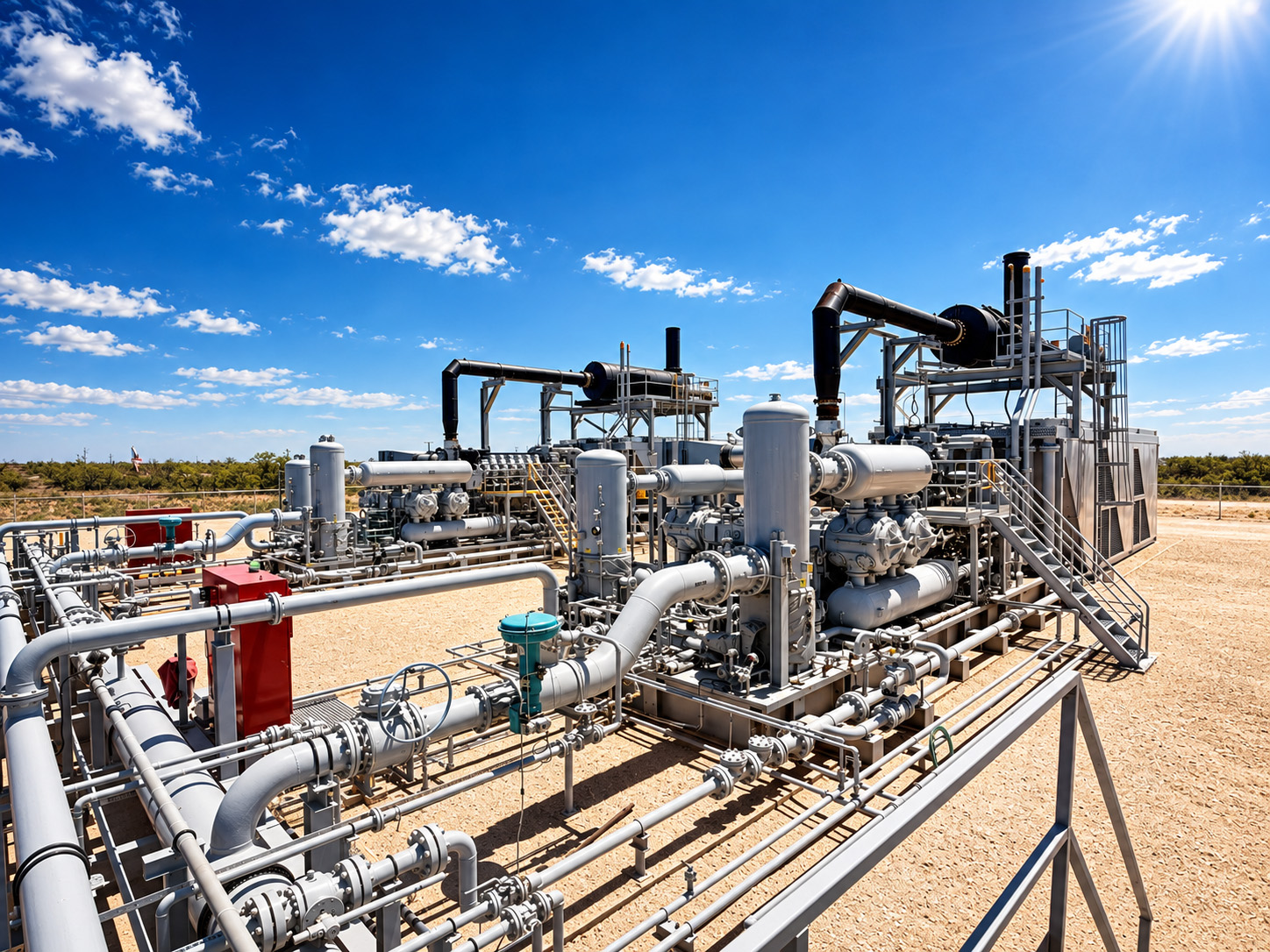
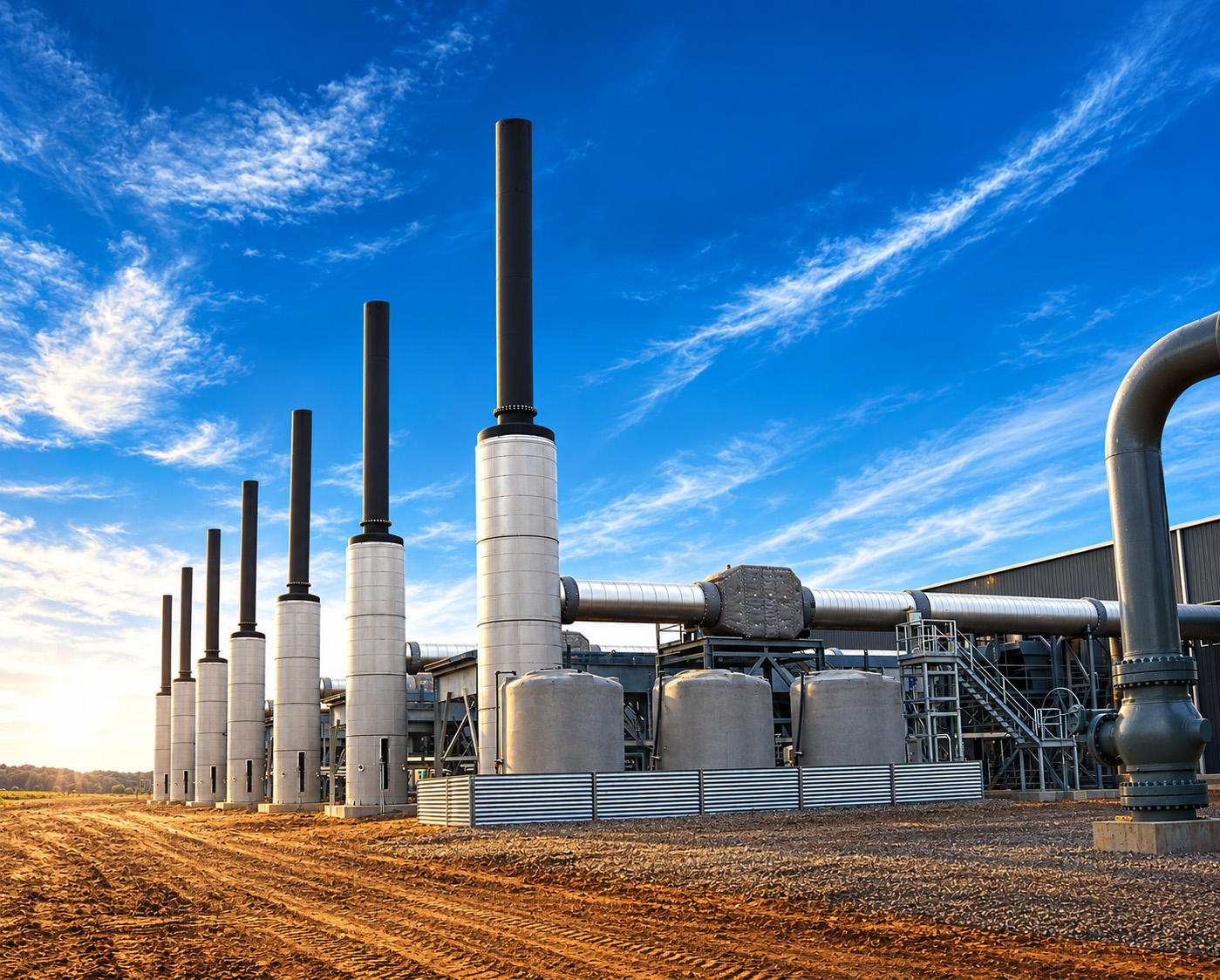
Every Interface Affects Performance.
Exhaust temperature, flow distribution, backpressure, acoustic performance, structural loads, controls and service access all influence how the system performs in the field.
MIRATECH works from the industrial engine outward—engineering four connected requirements around the engine, site and actual duty.
Emissions Performance
Match catalyst chemistry, raw emissions, exhaust temperature, flow and controls to the engine, fuel and required conversion performance.
Acoustic Performance
Control engine exhaust noise within permit and community limits while managing pressure drop, footprint, structural requirements and maintenance access.
Exhaust Architecture
Engineer housings, silencers, piping, expansion joints, insulation, supports and accessories as one connected path from the turbo flange to the raincap.
Maintainability
Build inspection and service access into the system, then plan testing, replacement elements, washing, regeneration and parts around the asset’s operating life.
The Complete System Can Include
One system view. Fewer handoffs. Clearer accountability for the operating result.
Keep the System Ready. Keep Gas Moving.
Rental compressors can move every 6 months. Storage sites and transmission – decades. During that time, catalysts age, engine conditions change, components wear and compliance requirements evolve. MIRATECH connects localized inventory, strategically located service centers and field service around one objective: minimizing avoidable downtime and sustaining the performance of the complete exhaust system.
Parts + Localized Inventory
Regional inventory supports access to catalysts, components and replacement parts for MIRATECH equipment and a broad range of installed systems. Local stocking supports planned maintenance, fleet standardization and unexpected operating needs without relying exclusively on distant supply points.
Strategically Located Service Centers
MIRATECH Catalyst Service Centers provide performance testing, catalyst washing and regeneration, replacement elements and precious-metals reclaim. These capabilities help operators understand remaining catalyst life and choose the appropriate maintenance path.
Catalyst Lifecycle Management
Testing, washing, regeneration, replacement planning and reclaim programs help operators manage catalysts as operating assets—not disposable components.
Fleet Support
Common parts strategies, documentation and service planning can reduce complexity across mixed engines, multiple stations and large geographic operating territories.
Built Across Regions. Positioned Around the Work.
MIRATECH connects engineering, manufacturing and lifecycle capabilities across North America, Europe and Asia-Pacific. Operations in Tulsa, Knoxville, Prior Lake, Winnipeg, Houston and Schlüchtern provide specialized capabilities across catalysts, housings, SCR systems, silencers, heat exchangers and exhaust accessories.
That reach supports individual stations, standardized fleet programs and operators working across multiple regions – while accounting for the fuel, climate, regulation, elevation and duty cycle that make every site different.
Emissions and acoustic systems for field and gathering compression operating across variable production rates, remote locations and changing inlet conditions.
Integrated exhaust solutions for compression supporting separation, treating, dehydration, liquids recovery and plant operations.
Systems engineered around high availability, station-wide compliance, acoustic limits and the long operating life of critical transmission assets.
Emissions and acoustic support for injection and withdrawal operations with seasonal duty cycles, changing loads and tight operating windows.
Engine exhaust systems supporting the gathering, processing and pipeline capacity required to move gas toward liquefaction and export facilities.
The Right Solution Starts With the Real Operating Profile
Technology selection begins with how the engine will actually operate: load, fuel, exhaust chemistry, temperature, flow, emissions requirements, acoustic limits and available footprint.
Rich-Burn Engines
Three-way catalyst systems, and catalytic silencers engineered around engine characteristics, exhaust chemistry and required conversion performance.
Lean-Burn Engines
Oxidation catalysts, SCR systems and integrated housings engineered around exhaust temperature and required NOx, CO, VOC and formaldehyde performance across the expected operating range.
Acoustic Systems
Silencers and combination systems engineered to manage exhaust noise, pressure drop, footprint and site-specific acoustic limits.
Exhaust Components + Accessories
Piping, expansion joints, insulation, supports, flanges and raincaps engineered to complete the exhaust path from the turbo outward.
From initial system design through parts, catalyst management and field support, MIRATECH brings the capabilities together to help keep compression compliant, available and moving.
Not a collection of components. One connected system built around the operating outcome.
